Zahnradweg Jungfraubahn planning guide
9.34 km, 25% max grade, 7 km in tunnel

A train climbs 1,400 metres through solid rock to reach the highest station in Europe.

The Jungfraubahn opened in 1912 after sixteen years of hand-dug tunnelling. It still runs the same route today: Kleine Scheidegg to Eigergletscher, into the mountain at Eigergletscher, past two window stations blasted into the north face of the Eiger, and out at Jungfraujoch, 3,454 m above sea level. This guide covers what each stop actually looks like, what it costs, and when the summit is worth the trip.

Departure board — the four stops, in order

Every stop the train actually makes on the way up.

The Jungfraubahn is a single line with four named stops. Two are request/technical stops most visitors skip past; two are where you'll actually get off. Here's what happens at each one.

  1. 2,061 mValley station
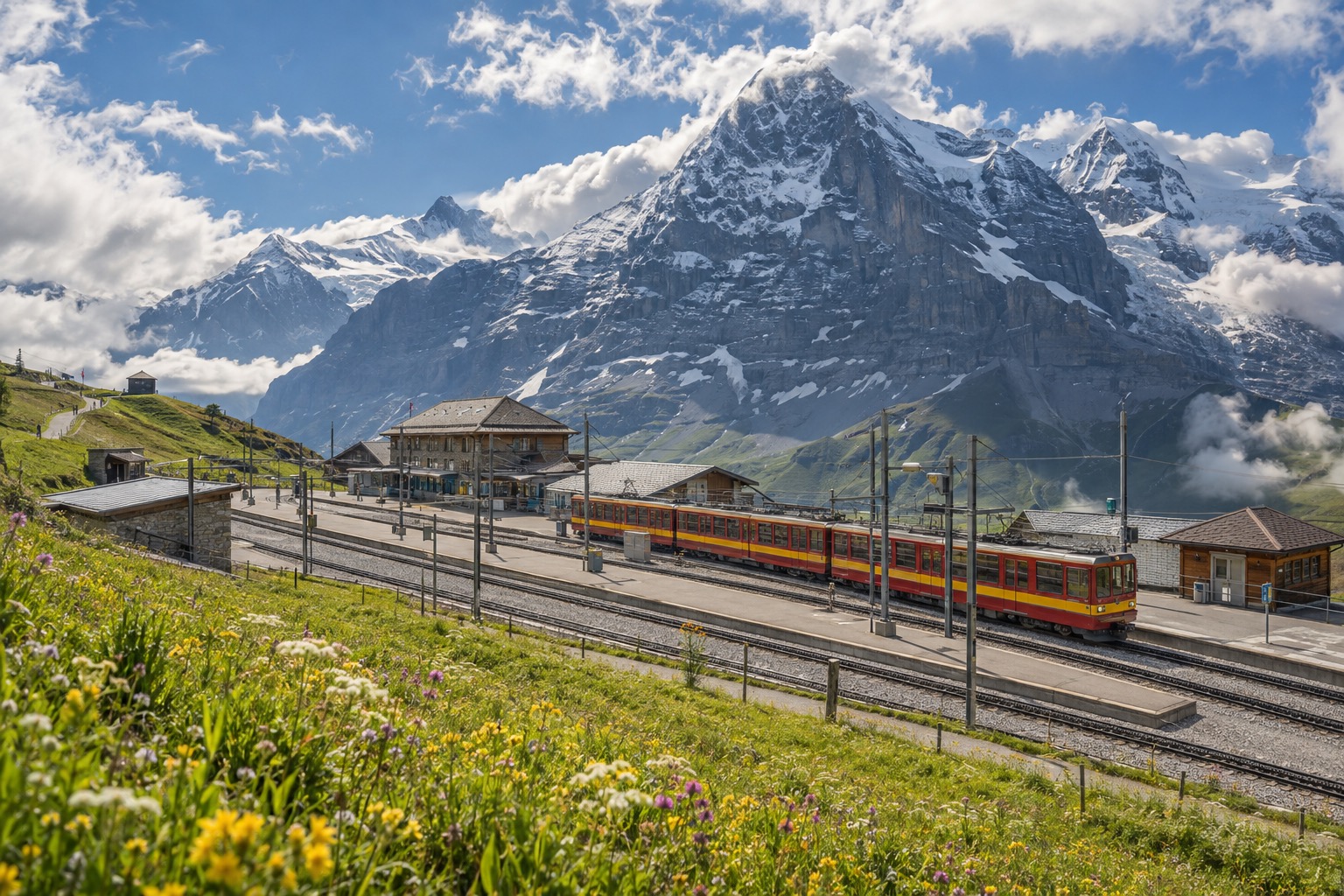
    Kleine Scheidegg railway junction below the north face of the Eiger

    Kleine Scheidegg

    The junction where the Wengernalpbahn from Wengen and Grindelwald meets the Jungfraubahn proper. Sits directly under the Eiger's north face, with the Mönch and Jungfrau filling the skyline behind it. No road reaches it — everyone arrives by train.

    Read more about Kleine Scheidegg
  2. 2,320 mInterchange
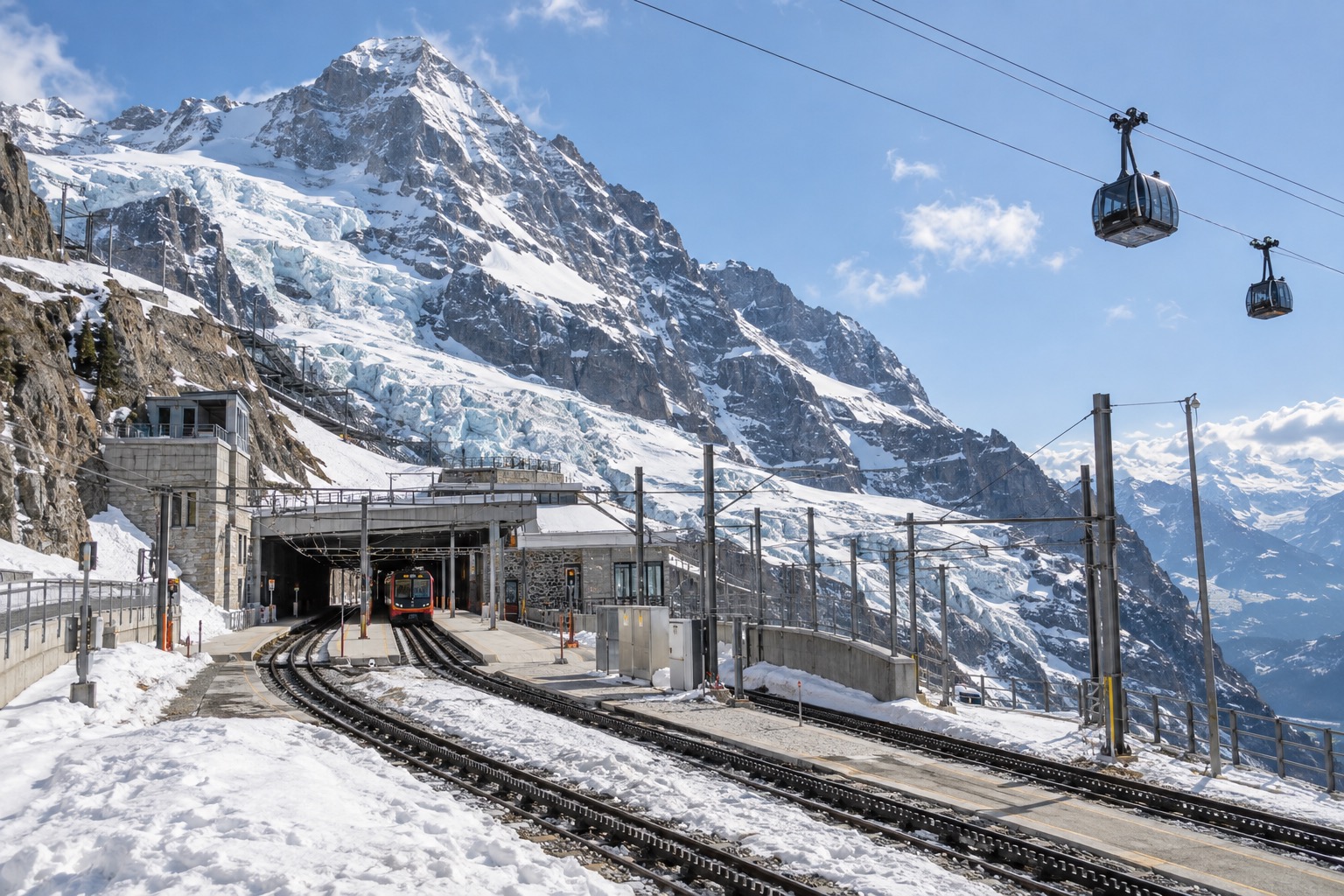
    Eigergletscher station at the base of the Eiger, glacier visible above

    Eigergletscher

    The last stop before the line disappears into the mountain. Since 2020 it's also the upper terminus of the Eiger Express gondola from Grindelwald — the fast way in, cutting roughly 30 minutes off the classic Wengen route.

    Read more about Eigergletscher
  3. 3,158 mIn-tunnel stop
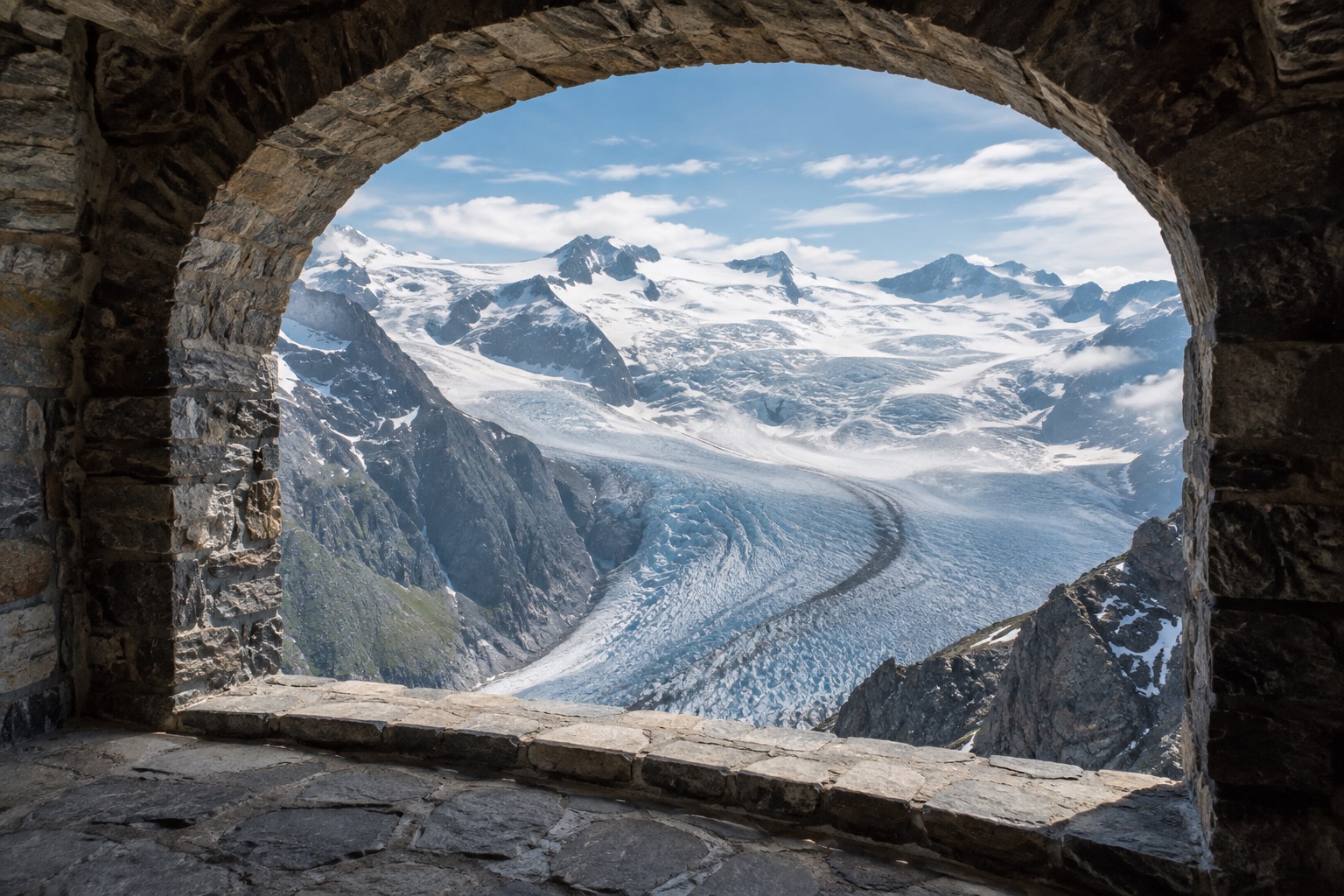
    View through the Eismeer window station cut into the Eiger's north face

    Eismeer

    A five-minute stop inside the tunnel, at a window blasted through the rock face during the original 1896–1912 construction. The train doors open onto a gallery looking straight down the Eiger's ice field — one of the only places to see this side of the mountain at all.

    Read more about Eismeer
  4. 3,454 mTerminus
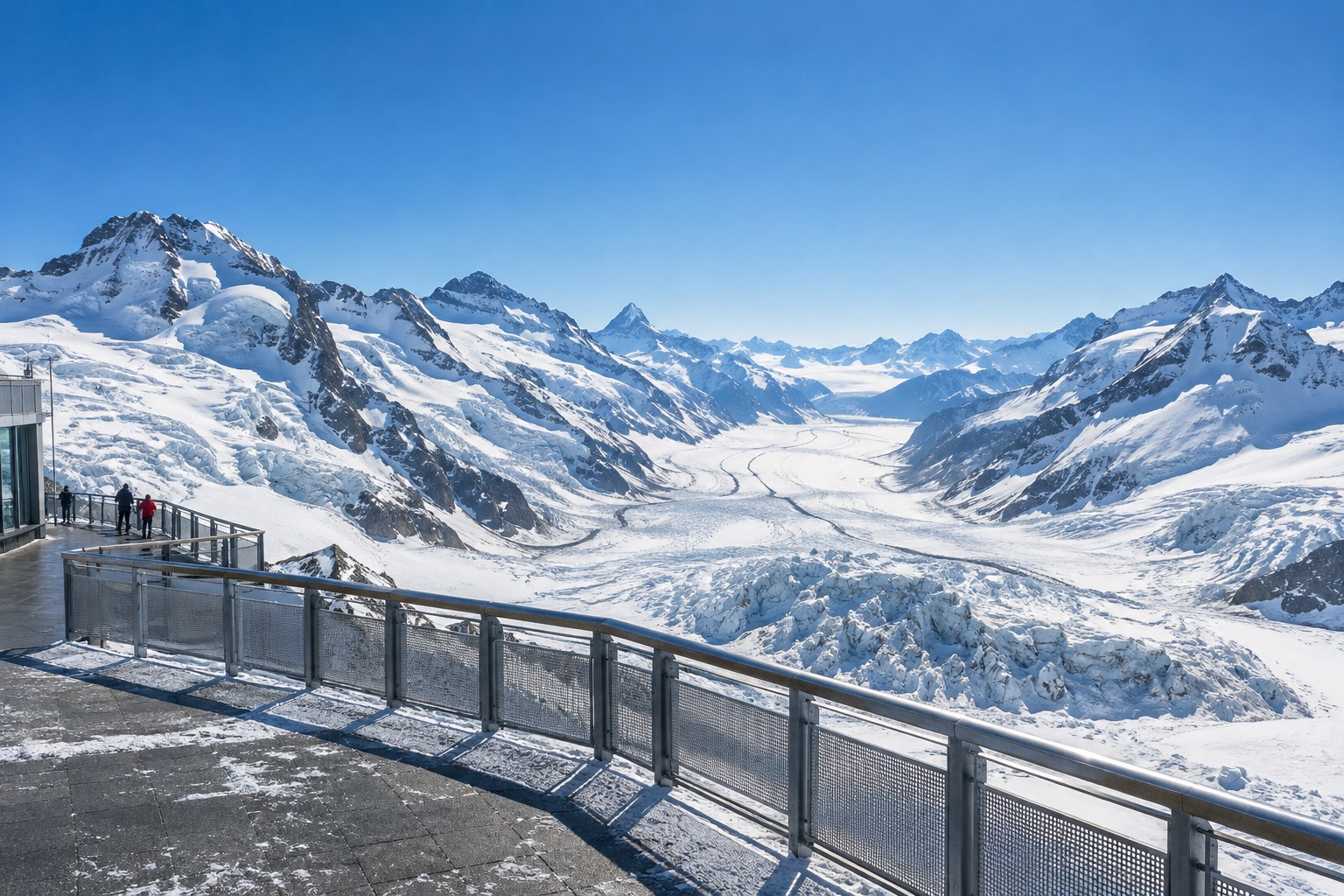
    Jungfraujoch Top of Europe station terrace with the Aletsch Glacier below

    Jungfraujoch — Top of Europe

    The highest railway station in Europe. From here: the Sphinx Observatory terrace, an ice palace carved into the glacier itself, and the first clear view down the length of the Aletsch Glacier, the biggest ice river in the Alps.

    Read more about Jungfraujoch

The numbers that actually decide your day.

Most guides quote the summit elevation and stop there. These are the figures that change what your trip actually feels like.

Line length
9.34 km
Elevation gained
~1,393 m
Built in tunnel
7 km of 9.34 km

Construction ran from 1896 to 1912 — sixteen years, almost entirely by hand. The line's maximum gradient is 25%, steep enough that it's built as a rack railway (a toothed centre rail the whole way) rather than relying on ordinary adhesion between wheel and track, which is why every train on this line is a genuine cogwheel train, not just a mountain train with a scenic name.
Two ways up, and they're not the same trip.

There's no road to Kleine Scheidegg or the Jungfraujoch. You choose your base, and your base decides your route.

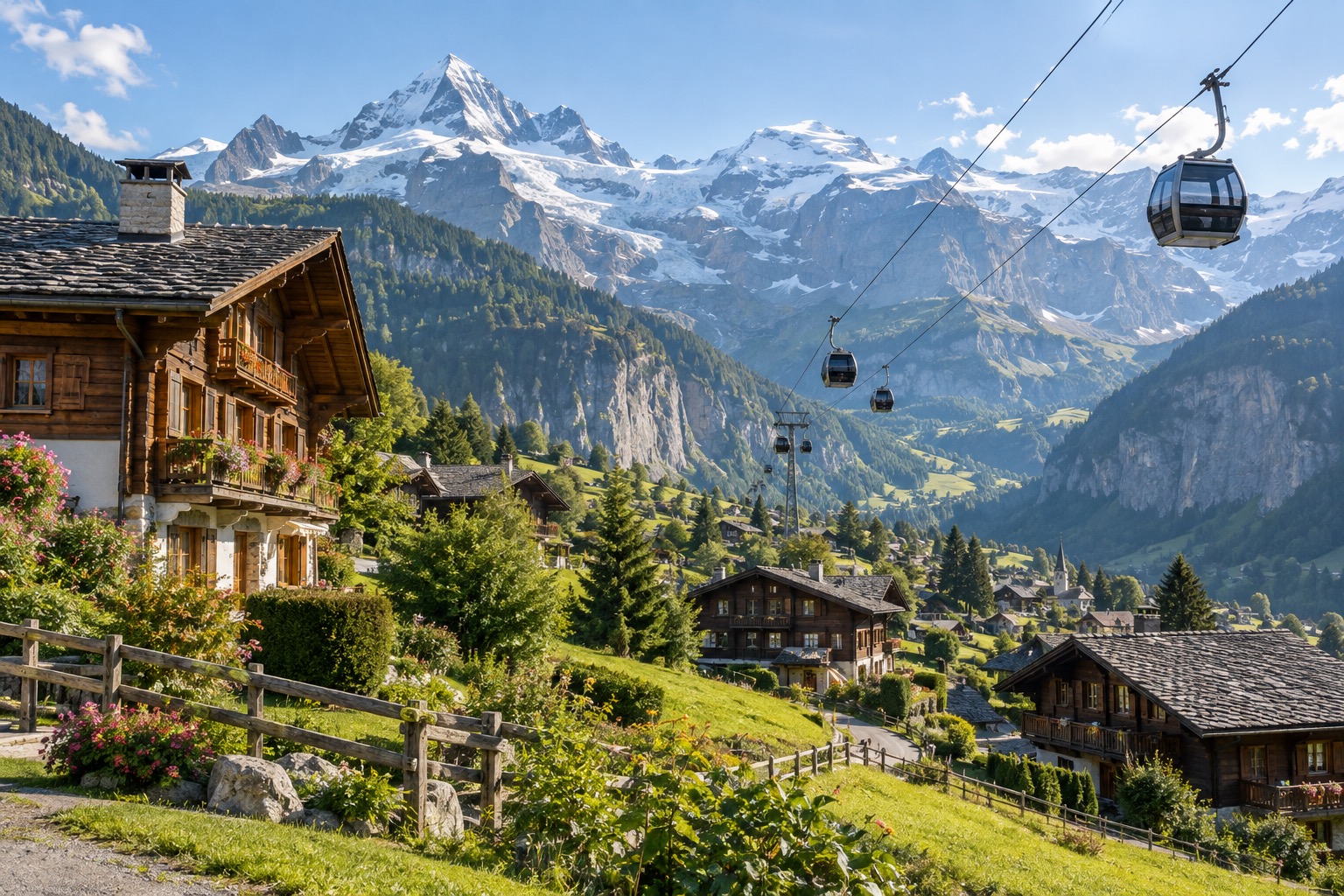
Grindelwald village with the Eiger Express gondola cables overhead

Via Grindelwald — the fast way

The Eiger Express gondola covers Grindelwald Terminal to Eigergletscher in around 15 minutes, replacing what used to be a much longer rail transfer. From Interlaken Ost, total travel time to the summit runs about 90 minutes.

Read the Grindelwald route
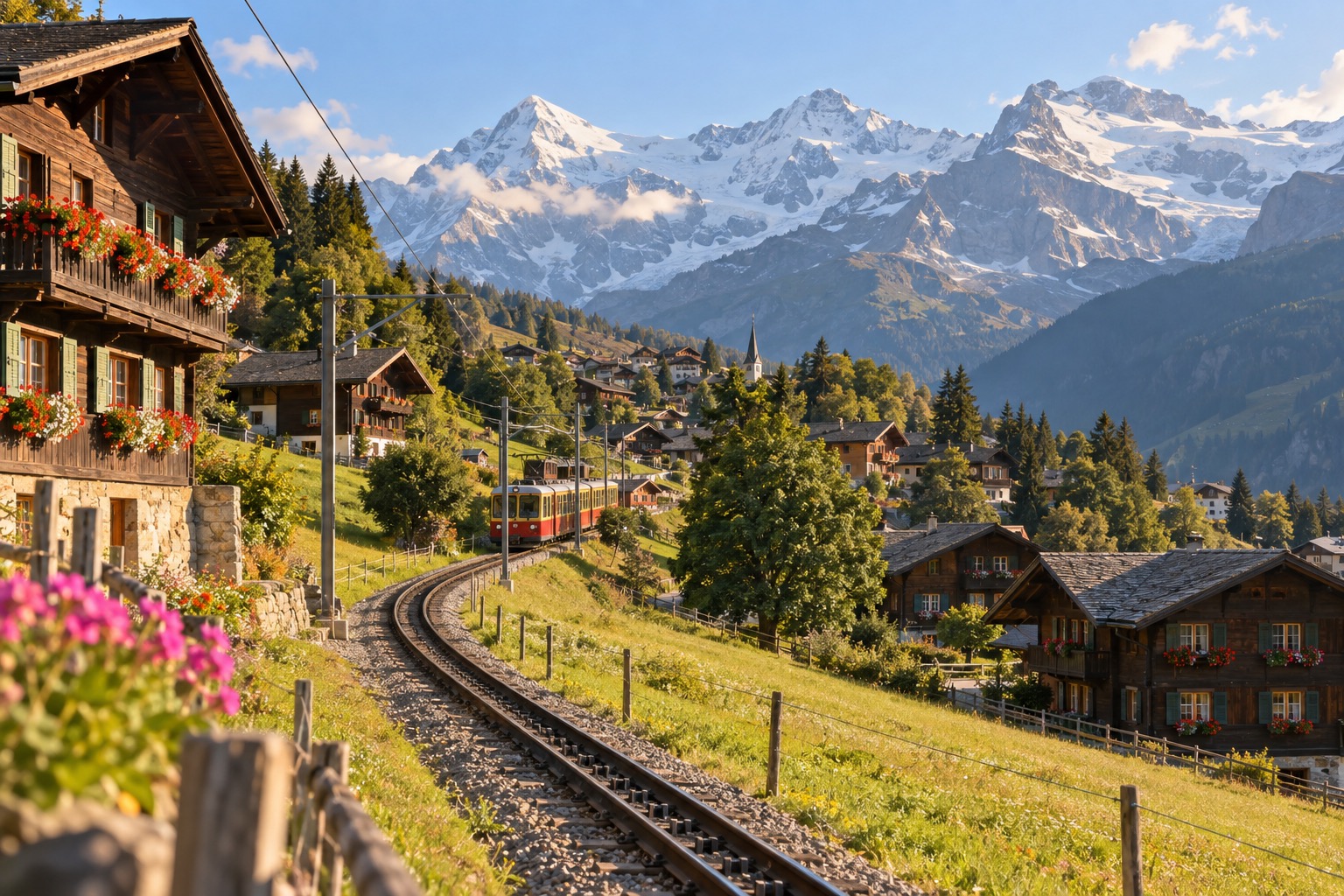
Wengen car-free village on the route to Kleine Scheidegg

Via Wengen & Lauterbrunnen — the scenic way

The classic route: Interlaken Ost to Lauterbrunnen by train, then the Wengernalpbahn cogwheel line up through car-free Wengen to Kleine Scheidegg. Slower — around two hours total — but the whole climb is above ground, in view of the valley.

Read the Wengen & Lauterbrunnen route

Ticket planner: work out your actual fare band.

Return fares to Jungfraujoch vary by where you board and which discount, if any, applies. Pick your starting point and ticket type for a realistic price range.

Choose a starting point to see your fare band.

These are indicative bands built from published 2025–2026 fare reporting, not live pricing — always confirm the exact fare on jungfrau.ch before booking, since rack-railway pricing is revised seasonally.

Before you book: three things that change everything.

"The mountain makes its own weather. A clear morning in Grindelwald tells you nothing about visibility at 3,454 m."

Read the full breakdown of how to actually plan your day, including why the earliest trains have the best odds of clear summit views, and what the webcam pages won't tell you the night before.